Last updated: April 22, 2026
Key Takeaways for Hitting Your Protein Goals
- Aim for 0.7-1g of protein per lb of bodyweight daily to support muscle growth when you lift consistently.
- Space protein in 20-40g servings every 3-4 hours, especially after training, to keep muscle protein synthesis elevated.
- Choose high-leucine proteins like whey isolate for faster absorption and a stronger anabolic response per serving.1
- GLP-1 users (e.g., Ozempic or Tirzepatide) often need 1.2-1.6g/kg daily to help preserve muscle during weight loss.
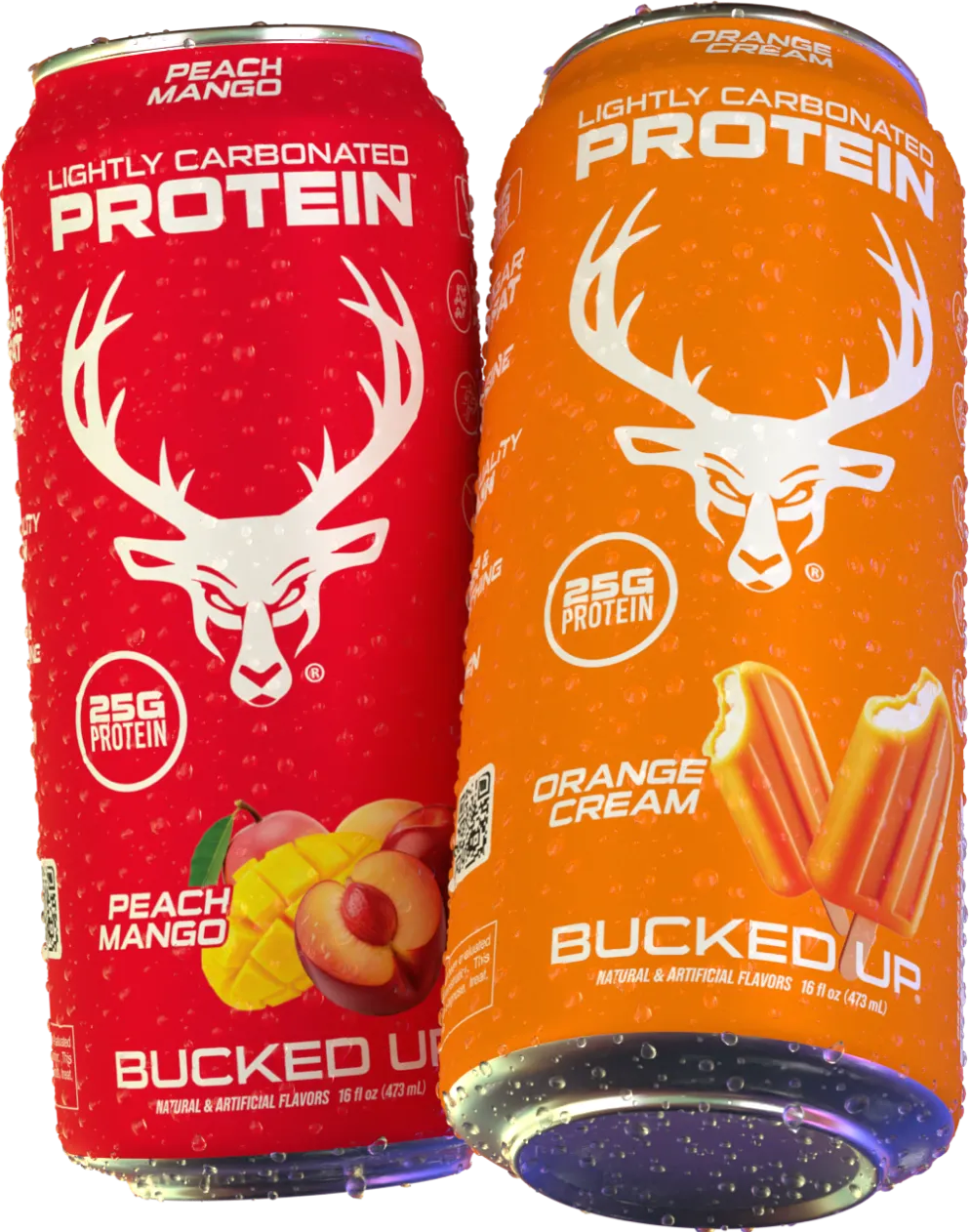
- Ready-to-drink options like Bucked Up Protein Soda make it easier to hit your target with a refreshing, zero-sugar, 100-calorie can.
Daily Protein Targets for Building Muscle
Most lifters build muscle effectively with 0.7-1g of protein per lb of bodyweight. This range aligns with 1.6-2.2g per kg. A 2018 meta-analysis found that protein intakes between 1.6 and 2.2 grams per kilogram maximize muscle growth when combined with resistance training. In that research, some trainees gained up to 27% more lean mass over 12 weeks compared to lower protein intakes.
Newly revised federal dietary guidelines recommend 1.2 to 1.6 grams of protein per kilogram of body weight daily for adults. That update represents roughly a 50% to 100% increase over the previous RDA. Your exact target depends on training intensity, age, and whether you use GLP-1 medications.
Use this quick formula: Protein Goal = Bodyweight (lbs) x 0.7-1. For example, a 180 lb person would aim for 126-180g of protein per day.
| Bodyweight (lbs) | Low End (g) | High End (g) |
|---|---|---|
| 150 | 105 | 150 |
| 170 | 119 | 170 |
| 190 | 133 | 190 |
| 210 | 147 | 210 |
Convenient drinks such as Bucked Up Protein Soda can help you close the gap on days when whole food falls short.
Protein Calculator in Action: 150g Sample Day
This example shows how a 150g protein target can look in a normal day of eating.
Day 1 Sample Plan:
- Breakfast: 3 eggs plus Greek yogurt (35g protein)
- Post-workout: Bucked Up Protein Soda (previously noted serving)
- Lunch: 6 oz chicken breast (54g protein)
- Snack: Cottage cheese (28g protein)
- Total: 142g protein
Research shows that spacing protein intake every 3-4 hours optimizes muscle protein synthesis. Placing a ready-to-drink protein option around your workout can support that steady rhythm.
Protein Types That Support Muscle Gain
Protein quality depends heavily on leucine content, the amino acid that kickstarts muscle protein synthesis. You need 2-3g of leucine per meal to maximize the anabolic response.
| Protein Type | Leucine per 25g | Absorption Rate | Best For |
|---|---|---|---|
| Whey Isolate | 2.5-2.7g | Fastest | Post-workout recovery |
| Whey Concentrate | 2.0-2.3g | Fast | General use |
| Plant Protein | Lower than whey | Moderate | Vegan diets |
| Collagen | 0.5-1.0g | Moderate | Joint health |
Whey isolate can stand out for muscle building because it absorbs quickly and delivers more leucine per gram than many alternatives.1 Studies show whey isolate produces the fastest rise and highest peak plasma concentrations of essential amino acids compared to other protein sources.1
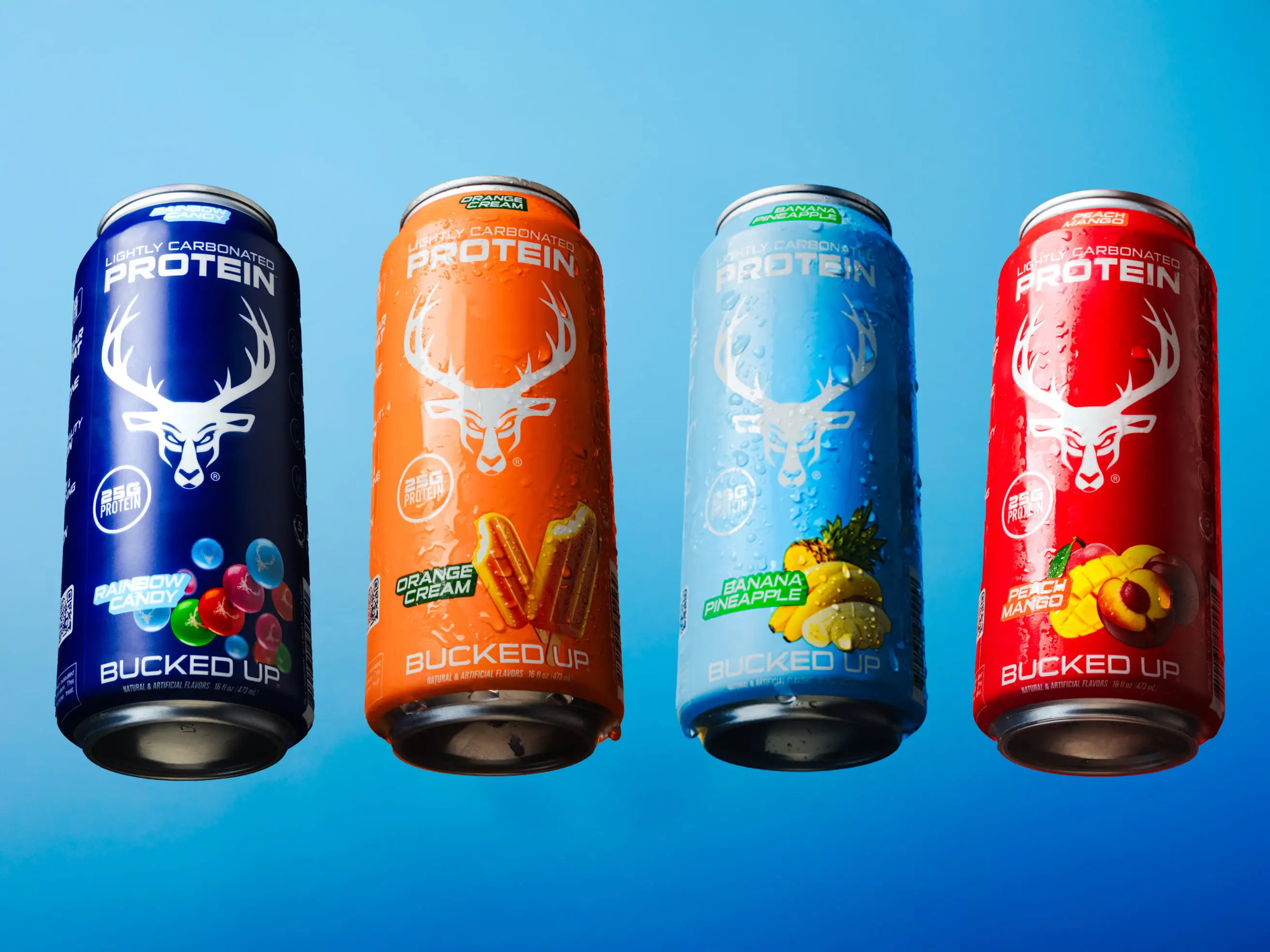
Bucked Up Protein Soda uses a whey isolate base with 100 calories and zero sugar. This format focuses on purity and rapid digestion compared to many whey concentrate blends.1
Top Protein Foods and Drinks for Muscle Growth
These options provide reliable protein for building and maintaining muscle.
- Chicken breast (54g per 6 oz)
- Eggs (24g per 4 whole eggs)
- Plain, nonfat Greek yogurt (20g protein per 7 oz container)
- Whey isolate sodas like Bucked Up for a light, drinkable protein source
- Lean beef (46g per 6 oz)
- Cottage cheese (28g per cup)
- Turkey (2.8g leucine per cup)
- Wild coho salmon, cooked with moist heat (1.89 g of leucine per 3 oz)
- Tempeh (33g protein per cup)
- Cooked shrimp (39g protein per 6 oz)
Among ready-to-drink choices, Bucked Up offers a light, carbonated experience that feels closer to a soda than a thick shake.
Protein and Muscle on Tirzepatide, Ozempic, and Other GLP-1s
People using GLP-1 receptor agonists face a higher risk of losing muscle while they lose weight. Medical experts recommend 1.2-1.6g per kg of body weight daily for GLP-1 users to help counteract muscle loss. That target sits well above standard guidelines.
Clinical studies show that roughly 20-40% of weight lost on GLP-1 medications may come from lean mass without sufficient protein intake. For many GLP-1 users, reduced appetite makes large solid meals difficult, so liquid protein becomes a practical tool.
Bucked Up Protein Soda can help in this situation because it is easy to drink when heavier foods feel unappealing. Each can contributes a meaningful serving of protein in just 100 calories, and the carbonation feels refreshing instead of overly filling.
Explore Bucked Up Protein Soda if you want a protein option that fits better with the appetite changes common on GLP-1 medications.
Timing Your Protein for Better Muscle Gains
Consume 20-40g of protein within 30-60 minutes post-workout to stimulate muscle growth and repair. Hitting your total daily protein still matters more than chasing a narrow timing window.
Use these timing strategies as a simple framework to support muscle growth throughout the day.
- Post-workout: Take 20-40g of protein within 2 hours to take advantage of your body’s heightened recovery state.
- Before bed: Have 20-25g of slow-digesting protein to support overnight muscle repair.
- Throughout the day: Include a protein source every 3-4 hours to keep amino acid levels steady.
- Pre-workout: Eat a light protein meal 1-2 hours before training to fuel performance without stomach discomfort.
FAQ: Protein Soda, Whey Isolate, and GLP-1 Use
What is the difference between whey isolate and whey concentrate?
Whey isolate goes through more filtration, which raises protein purity to about 90-95% and lowers fat and lactose. Isolate absorbs faster and often reaches higher bioavailability scores than dry whey protein concentrate which contains 25% to 89.9% protein.1 Many people find isolate ideal for post-workout recovery and easier on sensitive stomachs.1
Is protein soda suitable for keto diets?
Yes. Bucked Up Protein Soda contains zero carbs and zero sugar, so it fits well with ketogenic eating. Each can supplies a full serving of protein without affecting ketosis, and the carbonated texture offers a lighter option than many cream-based keto foods.
How much protein should I consume on tirzepatide or other GLP-1 medications?
GLP-1 users should generally target 1.2-1.6g per kg of body weight daily, which equals roughly 0.55-0.75g per lb. That higher range helps preserve muscle during rapid weight loss. Liquid protein sources such as Bucked Up Protein Soda can feel easier to consume when large solid meals are unappealing.
Can I drink protein soda every day?
Daily use works for most people who want a convenient way to reach their protein goal without heavy shakes. The caffeine-free formula fits at any time of day, and the zero-sugar content supports regular use as part of a balanced nutrition plan.
Does protein soda taste like regular protein shakes?
Protein soda offers a different experience than traditional shakes. Bucked Up Protein Soda tastes closer to a flavored energy drink, with a crisp, light, refreshing profile. There is no milky texture, no chalky residue, and no heavy aftertaste that many shakes leave behind. The light carbonation creates a drink that many customers look forward to including in their routine.
Ready to upgrade how you hit your protein target? Shop Bucked Up Protein Soda and support your muscle-building goals with a convenient, carbonated protein drink. With a full whey isolate serving in every refreshing can, staying on track with your daily protein can feel much easier.1
1 The content provided in this article is for informational purposes only and is not medical advice. Consult with a medical professional before implementing any changes to your diet, health, or exercise routines.
Individual results will vary and are based on a combination of each individual’s diet, exercise, age, and health circumstances.
These statements have not been evaluated by the Food and Drug Administration. This product is not intended to diagnose, treat, cure or prevent any disease.
This article was written by Ryan Gardner, CEO of Bucked Up. As the maker of Bucked Up Protein Soda, we have a financial interest in this information. The views expressed are our own and should be read with that context in mind.