Last updated: April 22, 2026
Key Takeaways
- The protein beverage market reached $1.8B in 2025 as many people moved from heavy shakes to lighter, easier-to-digest options like carbonated protein sodas.
- Bucked Up Protein Soda provides 25g whey isolate protein in 100 calories with zero sugar, comparing favorably to higher-calorie, milky shakes in the 2026 review.
- This format can work well for GLP-1 users, seniors, and athletes who need easy-to-digest protein to preserve muscle, support recovery, and address sarcopenia risk.
- Whey isolate offers high purity (often 90%+ protein), faster absorption, and less bloating than concentrate, which can improve tolerance.
- You can upgrade your protein routine with Bucked Up Protein Soda for a refreshing, low-calorie recovery drink at almost any time of day.
How 2026 Protein Drinks Compare on Calories, Sugar, and Format
This comparison shows how carbonated protein sodas can match traditional shakes on protein while cutting calories and sugar. Each data point comes from official product specifications and nutritional labels.
| Brand/Product | Protein (g) | Calories | Sugar (g) | Format |
|---|---|---|---|---|
| Bucked Up Protein Soda | 25 | 100 | 0 | Carbonated Clear |
| Premier Protein | 30 | 160 | 1 | Milky Shake |
| Core Power Chocolate 26g Protein Shake | 26 | 170 | 5 | Milky Shake |
| Fairlife Core Power Elite Chocolate Protein Shake | 42 | 230 | 7 | Milky Shake |
The comparison highlights clear gaps in calorie density and sugar content between formats. Traditional milky shakes usually carry more calories and sugar than clear, carbonated options, even at similar protein levels. This sets up carbonated protein sodas as a practical choice for people watching calories or sugar intake.
#1 Bucked Up Protein Soda: Clear, Carbonated Whey Isolate
Bucked Up Protein Soda uses a lightly carbonated, clear whey isolate formula that delivers 25g of protein in just 100 calories. This lean profile with zero sugar, zero carbs, and zero caffeine supports flexible use throughout the day without adding extra stimulants or hidden sugars. The product uses whey protein isolate, which digests faster than concentrate because it contains less fat and lactose, so amino acids reach your muscles quickly after training.
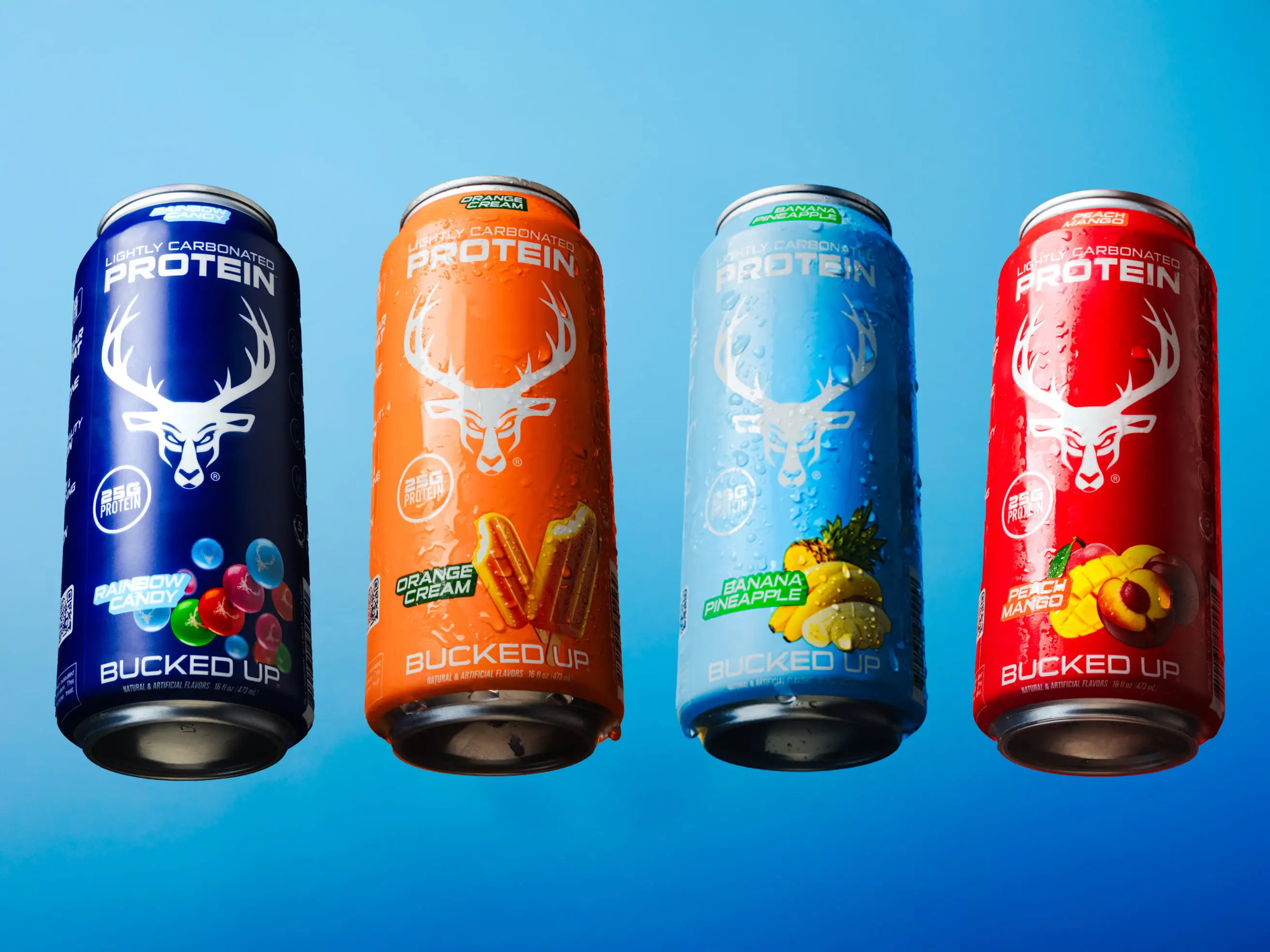
The flavor experience feels closer to an energy drink than a shake, which removes the chalky texture and heavy mouthfeel many people dislike. This lighter feel can make it easier to hit daily protein targets consistently.
The clear whey isolate base also supports digestive comfort. Whey protein isolate typically contains less than 1g lactose per serving compared to 3–4g in concentrate, which can reduce bloating for people sensitive to lactose. This easier digestion can be especially helpful for GLP-1 users who already deal with slower gastric emptying.
Manufactured in USA GMP-certified facilities, Bucked Up Protein Soda is also available on Amazon for convenient ordering. Try Bucked Up Protein Soda today to experience a different take on protein supplementation.
Why Carbonated Protein Works for GLP-1 Users and Weight Loss
GLP-1 receptor agonist users often struggle to eat enough protein because of appetite suppression and early fullness. Guidelines suggest 1.0–1.5 grams of protein per kilogram of ideal body weight daily for GLP-1 users, spread across 25–40 gram servings per meal to help protect muscle.
Bucked Up Protein Soda supports these needs with a light, non-filling format that still delivers 25g of high-quality protein. The carbonated texture can feel easier to tolerate when thick shakes feel heavy, and lighter drinks are often better tolerated than dense shakes for people prone to nausea. At only 100 calories per can, it fits into calorie-controlled plans while helping reduce muscle loss during weight reduction.
Protein Support for Muscle Gain and Post-Workout Recovery
Post-workout protein quality and timing influence muscle protein synthesis and recovery. Whey protein isolate absorbs quickly, which suits post-workout muscle protein synthesis.
Bucked Up’s 25g whey isolate serving provides enough leucine to help trigger muscle protein synthesis. Research points to a leucine threshold of about 2.5–3 grams per meal for maximal stimulation, and one serving of Bucked Up can help reach that range. Beyond meeting this leucine threshold, the carbonated format offers a lighter option than heavy shakes, which can reduce bloating that might interfere with later training sessions, especially for athletes who train more than once per day.
The zero-carb formula also fits ketogenic and low-carb approaches that many physique athletes follow. This flexibility allows steady protein intake even when carbohydrate intake changes across training or competition phases.
Protein Drinks for Seniors and Age-Related Muscle Loss
Sarcopenia affects many older adults, with notable prevalence in community-dwelling adults aged 60 and older. Rates climb after age 65, and up to 50% of adults 80 and older may be affected.
Bucked Up Protein Soda can support senior nutrition by offering a light, easy-to-swallow drink instead of thick shakes that may feel difficult to manage. The pleasant, soda-like taste can encourage regular use. Cleveland Clinic recommends spreading protein intake throughout the day at the same 25–35 gram per-serving threshold mentioned earlier, and Bucked Up’s 25g serving fits into that range. The caffeine-free formula also helps avoid sleep disruption for older adults who are sensitive to stimulants.
Whey Protein Isolate vs. Concentrate: Why Purity and Tolerance Matter
Whey protein isolate contains at least 90% pure protein on a dry matter basis with almost zero lactose and very low carbs and fats, while concentrate keeps more of these extra components. For people with digestive sensitivities or strict macro targets, isolate can offer tighter control and smoother digestion.
As noted earlier, isolate’s near-zero lactose content compared to concentrate’s 3–4g per serving is one part of its purity advantage. Bucked Up’s exclusive use of whey protein isolate supports high protein intake without many extra calories from fats or carbohydrates. This can be especially useful for anyone tracking calories closely while trying to keep protein high. Get the isolate advantage with Bucked Up Protein Soda.
How to Pick a Protein Drink That Fits Your Goals
Choosing a protein beverage starts with matching the product to your goals and lifestyle. Start with protein source quality, since isolate sources usually provide higher purity and faster absorption than concentrate or many plant blends. Once you have identified high-quality options, look at calorie density compared to protein content so you know how much protein you get for each calorie.
Format also shapes long-term consistency. Milky shakes can cause bloating or discomfort for some people, while carbonated options like Bucked Up feel lighter and more refreshing. Timing matters as well, and caffeine-free products give you more flexibility to drink them in the evening without affecting sleep.
Ingredient transparency and manufacturing standards round out the decision. Products made in GMP-certified facilities with clear labels offer added confidence about quality and safety. Testing a few formats can help you find what your body tolerates best and what you actually enjoy drinking day after day.
Bucked Up Protein Soda can stand out as a 2026 protein beverage choice by pairing carbonated delivery with whey isolate nutrition. Whether your focus is weight loss, muscle gain, or healthy aging, this style of drink can make consistent protein intake more practical and enjoyable. Transform your protein routine with Bucked Up Protein Soda.
Frequently Asked Questions
What makes carbonated protein drinks different from traditional protein shakes?
Carbonated protein drinks like Bucked Up Protein Soda create a very different experience than thick, milky shakes. The bubbles and clear liquid feel more like an energy drink than a dessert-style shake, which removes the chalky texture and heavy mouthfeel many people dislike. This lighter feel can also be easier on digestion and less likely to cause bloating, which helps people with sensitive stomachs or GLP-1 users dealing with delayed gastric emptying.
How much protein do I need daily, and can protein beverages help me reach that goal?
Daily protein needs depend on age, activity level, and health status. Active adults often do well with 1.2–1.6 grams of protein per kilogram of body weight, while seniors and people on weight loss medications may benefit from the higher end of that range to protect muscle. For a 150-pound person, about 80–110 grams of protein per day (1.2–1.6 g/kg) supports healthy maintenance or the lower end of muscle gain and fat loss goals. Protein beverages like Bucked Up Protein Soda, with 25 grams per serving, can make it easier to reach those numbers when appetite, time, or digestion limit whole-food intake.
Is whey protein isolate better than concentrate for muscle building?
Both whey isolate and concentrate can support muscle building when your total daily protein is high enough. Isolate offers practical advantages such as faster absorption from lower fat and lactose, higher protein concentration per serving, and smoother digestion for people who do not tolerate lactose well. As discussed earlier, isolate’s higher protein concentration means you get more protein for each calorie you drink. For people focused on lean gains while managing calories, or anyone with digestive issues, isolate often feels easier to use consistently.
Can seniors safely use protein beverages to combat muscle loss?
Protein beverages can help seniors address age-related muscle loss when whole-food intake falls short. A light, easy-to-swallow drink like Bucked Up Protein Soda can work well for people who struggle with chewing, low appetite, or swallowing thick shakes. The 25g protein serving lines up with per-meal targets often suggested for older adults. The caffeine-free formula also supports better sleep for seniors who react strongly to stimulants.
Are protein sodas suitable for people taking GLP-1 medications like Ozempic or Wegovy?
Protein sodas can fit well for people on GLP-1 medications because they combine a light format with meaningful protein content. These medications often reduce appetite and increase fullness, which makes it hard to eat enough protein from solid foods. The carbonated, clear format is less likely to feel heavy or trigger nausea than thick shakes, while still helping you reach the 25–40 grams of protein per meal recommended for muscle preservation during weight loss. A zero-sugar, low-calorie profile also supports weight management while supplying protein to help protect muscle as body weight drops.