Last updated: April 22, 2026
Key Takeaways for Hitting Your Protein Goals
- A daily intake of 0.7-1g protein per lb body weight supports muscle growth and muscle protein synthesis.
- Find your target by multiplying body weight in pounds by 0.7-1g, or use goal weight if you are currently overweight.
- Spread protein across 4-5 meals with roughly 20-30g per meal from high-quality, leucine-rich sources.
- GLP-1 users and plant-based athletes may benefit from 20-40% more protein to preserve muscle and match amino acid profiles.
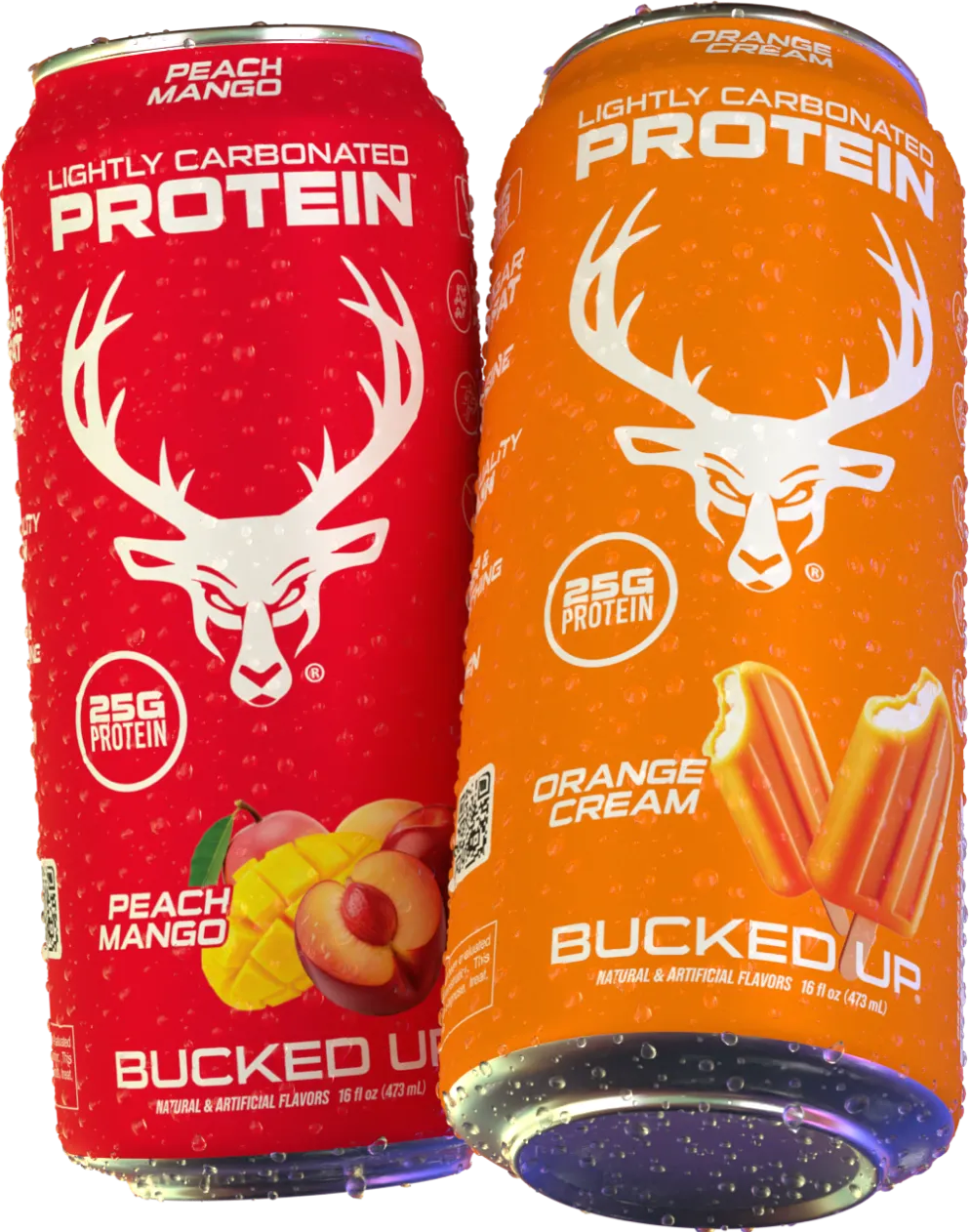
- Bucked Up Protein Soda can help you reach your goal, with 25g whey isolate and 100 calories in each refreshing can.1
The Science Behind Protein and Muscle Growth
Protein intake has a direct impact on muscle hypertrophy. The International Society of Sports Nutrition (ISSN) Position Stand by Jäger et al. (2017) recommends 1.4–2.0 g protein per kg body weight per day for strength-trained individuals aiming to increase muscle mass. Morton et al. (2018) further showed that dietary protein supplementation can significantly increase resistance training-induced gains in fat-free mass and strength.1
Converted to pounds, this aligns with the 0.7-1g per lb range that supports muscle protein synthesis. Leucine, an essential amino acid, plays a key role by triggering the muscle-building process. For older adults (>60 years), the minimum per-meal threshold to effectively stimulate muscle protein synthesis (MPS) is ~30 grams of high-quality protein. Spreading intake across 4-5 meals during the day helps keep MPS elevated.
People using GLP-1 medications like Ozempic or Mounjaro often need more protein because these medications can accelerate weight loss, including potential muscle loss. Endocrine Direct Care Physicians recommend 1.2 to 1.6 grams of protein per kilogram of body weight daily for muscle preservation during weight loss on GLP-1 receptor agonist medications. This higher intake helps provide enough amino acids to maintain lean mass during rapid weight reduction.
Simple Math to Calculate Your Daily Protein Target
Calculating your daily protein target stays simple when you use pounds. Weigh yourself in pounds, then multiply that number by 0.7-1g to find your daily protein range. Here is how that looks for common body weights:
| Body Weight (lbs) | Min Protein (g) | Max Protein (g) | Bucked Up Cans |
|---|---|---|---|
| 150 | 105 | 150 | 4-6 |
| 175 | 122 | 175 | 5-7 |
| 200 | 140 | 200 | 6-8 |
Once you know your target range, the next step is finding realistic ways to hit those numbers every day. This table shows how Bucked Up Protein Soda can contribute to your daily goals alongside whole foods. Each can contains 25g of rapidly absorbed whey protein isolate, which helps close the gap between your food intake and your ideal total.1 Start hitting your protein targets with refreshing convenience.
Is 100g of Protein Enough for You?
Whether 100g of protein per day works for muscle growth depends on your body weight and goals. For a 150-pound (68 lb) active person, the recommended daily protein intake is 82 to 116 grams, so 100g can fall within a reasonable range for lighter individuals or those with modest muscle-building goals.
For a 200lb man focused on muscle gain, higher intakes in the 140-200g range align more closely with the 0.7-1g per lb guideline. For a 200-pound (91 lb) active person, the recommended daily protein intake is 109 to 155 grams, which illustrates how needs rise with body size and training demands.
In metric terms, the research-backed range is 1.6-2.2g per kg of body weight. Plant-based athletes face an additional consideration, since vegetarian and vegan tactical athletes may need about 20–40% more plant protein during intense training to match the essential amino acids (EAA) and leucine delivered by animal sources.
Timing Your Protein and Choosing Effective Sources
Strategic timing of protein intake can support better muscle growth. Consuming 15 to 25 grams of protein within a few hours after exercise can help stimulate muscle repair and adaptation. In addition, Mamerow et al. (2014) found that evenly distributing protein intake across breakfast, lunch, and dinner stimulates muscle protein synthesis more effectively than a skewed distribution with most protein at dinner.
Here’s how different protein sources compare:
| Source | Protein (g) | Calories | Notes |
|---|---|---|---|
| Bucked Up Protein Soda | 25 | 100 | Rapid-absorbing whey isolate |
| Chicken breast (6oz) | 40 | 267 | Complete amino acid profile |
| 6 large whole eggs | 37.8 | 441 | High biological value |
Bucked Up Protein Soda offers a convenient, lighter option compared to many traditional shakes. Instead of a thick, milky drink, you get a crisp, carbonated experience that feels closer to a flavored beverage than a dessert. Try Bucked Up to experience the difference yourself.
Why Bucked Up Protein Soda Fits Busy, Active Lifestyles
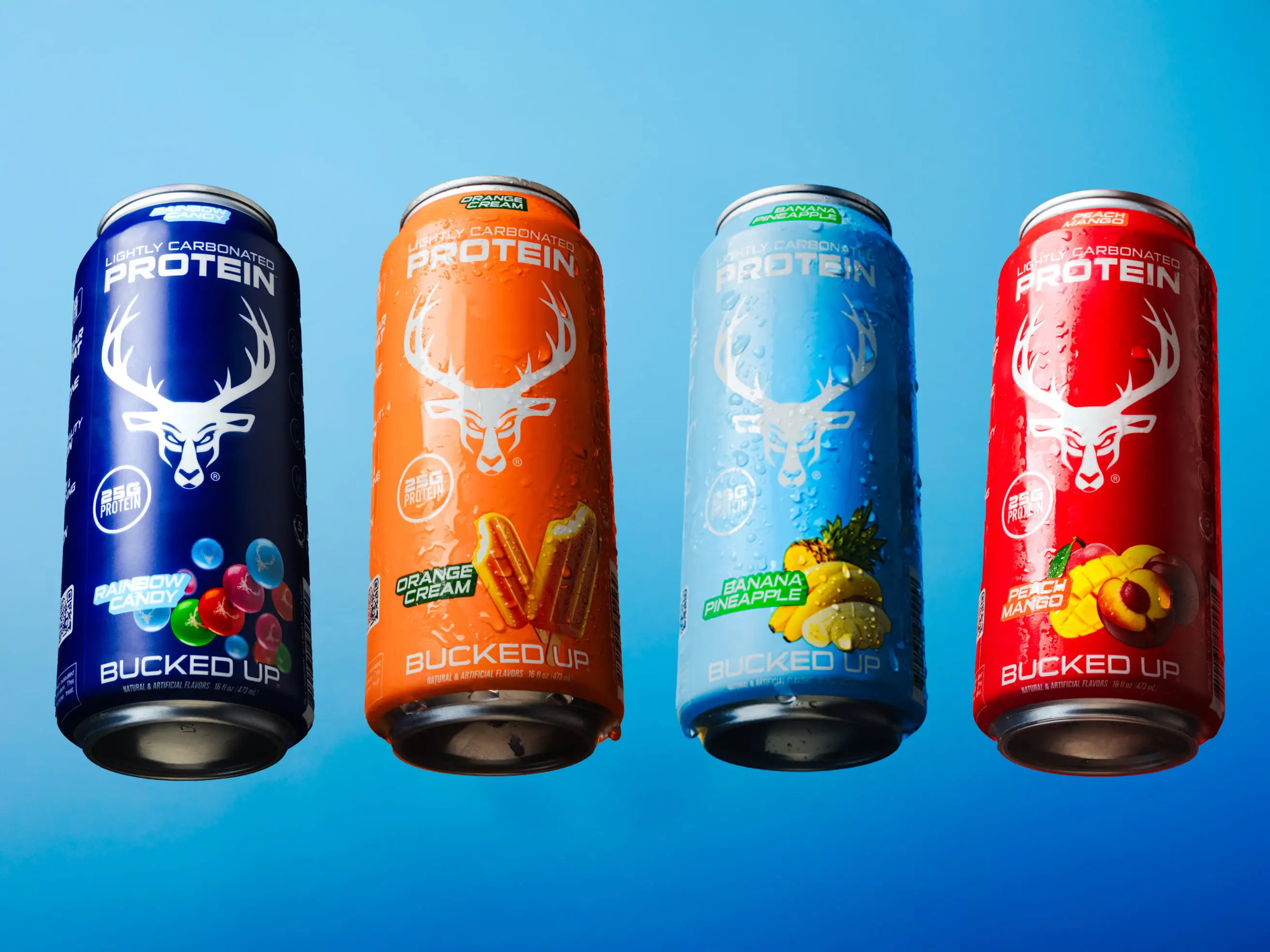
Bucked Up Protein Soda provides a distinct approach to protein supplementation through its formulation and format. The product features whey protein isolate, which goes through more rigorous filtration than concentrate, resulting in faster absorption and higher protein purity.1 Each can supplies 25g of protein with zero sugar, zero carbs, and only 100 calories.
The carbonated format also addresses common complaints about traditional protein drinks. Many ready-to-drink options feel heavy and milky, which can be unappealing before or after workouts. Bucked Up offers a light, crisp experience similar to an energy drink but without caffeine, so you can enjoy it morning, afternoon, or evening.
Manufacturing in GMP-certified facilities in the USA supports consistent quality and safety standards. The whey isolate formulation works well with keto and paleo lifestyles, and the lighter feel means many people can drink it regularly without digestive discomfort.1 Experience protein supplementation without the digestive concerns.
Sample Daily Protein Plan for a 175lb Lifter
A simple daily plan can make a high-protein target feel manageable. Consider a 175lb individual aiming for about 180g of protein per day. Breakfast might include 3 whole eggs (18g), followed by a mid-morning Bucked Up Protein Soda (25g). Lunch could feature 6oz grilled chicken, then another Bucked Up can post-workout (25g), 6oz salmon at dinner (42g), and a Greek yogurt snack (20g).
This sample day reaches roughly 170g of protein, which falls comfortably within the target range for that body weight. The flexibility comes from swapping items based on preference while keeping the overall structure. Bucked Up Protein Soda can replace a traditional protein source whenever convenience matters most, such as during travel, busy workdays, or times when you want something refreshing instead of another heavy meal. Make your protein plan both effective and enjoyable.
Frequently Asked Questions
Does carbonation affect protein absorption?
Carbonation does not impair protein absorption. Whey protein isolate, the form used in Bucked Up Protein Soda, is rapidly absorbed regardless of carbonation. The bubbles simply change the drinking experience without reducing bioavailability or the protein’s ability to support muscle protein synthesis.1
How does Bucked Up compare to other protein drinks?
Bucked Up Protein Soda can feel different from many traditional protein beverages. Some ready-to-drink shakes have a thick, milky texture, while Bucked Up provides a clear, carbonated option. The product uses whey protein isolate, which may provide a complete amino acid profile and rapid absorption for muscle building.1 View product details.
Is it safe to drink Bucked Up Protein Soda daily?
Bucked Up Protein Soda can be consumed daily as part of a balanced diet. The product provides high-quality protein without excessive calories, sugar, or artificial additives. People with specific health conditions should still consult their healthcare provider, but for many active adults, it offers a convenient way to help meet daily protein goals.
What’s the protein per kg recommendation for muscle gain?
As discussed earlier, research supports a range of 1.6-2.2g of protein per kg of body weight daily for resistance-trained individuals. This corresponds to about 0.7-1g per lb, so you can use whichever measurement system feels more natural while aiming for the same intake.
Is 100g of protein enough for muscle building?
The usefulness of 100g of protein depends on your body weight and training intensity. As shown in the earlier examples, lighter individuals or those with smaller muscle-building goals may find 100g sufficient. Heavier or more active adults often benefit from higher intakes that align with the 0.7-1g per lb guideline.
Building muscle can feel much easier when your protein target is clear and your options fit your lifestyle. Aiming for 0.7-1g per lb of body weight gives you a science-backed range, and convenient choices like Bucked Up Protein Soda help you reach that number without relying only on heavy shakes or constant cooking.1 Each refreshing can delivers a measured dose of whey protein isolate, so you can support muscle growth even on your busiest days.1 Transform how you think about protein supplementation.
1 The content provided in this article is for informational purposes only and is not medical advice. Consult with a medical professional before implementing any changes to your diet, health, or exercise routines.
Individual results will vary and are based on a combination of each individual’s diet, exercise, age, and health circumstances.
These statements have not been evaluated by the Food and Drug Administration. This product is not intended to diagnose, treat, cure or prevent any disease.
This article was written by Ryan Gardner, CEO of Bucked Up. As the maker of Bucked Up Protein Soda, we have a financial interest in this information. The views expressed are our own and should be read with that context in mind.