Last updated: April 22, 2026
Key Takeaways
- Aim for 0.73-1.0 grams of protein per pound of body weight daily to support muscle growth alongside resistance training.
- Whey protein isolate digests quickly and provides all essential amino acids that support muscle protein synthesis.1
- Spread protein across 4-5 meals with 20-40 grams per meal, including a post-workout serving within 60-90 minutes.
- Match your protein plan to your lifestyle: gym-goers often need higher intakes, busy professionals benefit from convenience, and GLP-1 users need muscle-preserving strategies.
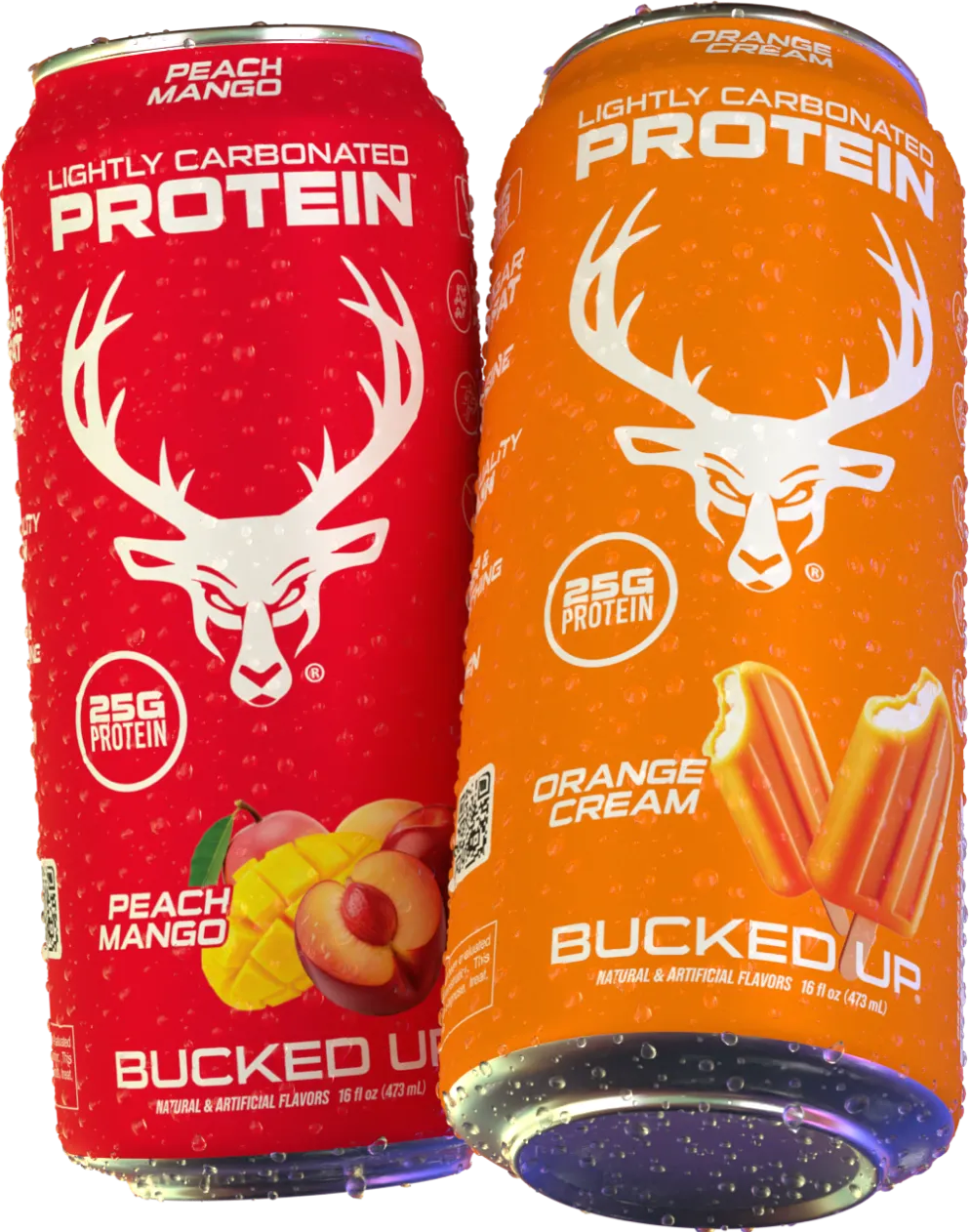
- Reach your protein goals more easily with Bucked Up Protein Soda, which delivers 25 grams of whey isolate in a refreshing, 100-calorie can.
How Much Protein Do You Need to Build Muscle?
Most people need more protein for muscle building than the old 0.8 grams per kilogram guideline suggested. The newly revised 2026 federal dietary guidelines recommend 1.2 to 1.6 grams of protein per kilogram of body weight per day for adults, an increase of 50% to 100% over the previous RDA.
Muscle hypertrophy often requires even higher intake. During a calorie deficit, resistance-trained adults are advised to target the higher end of 2.2 g/kg body weight or add 0.2 g/kg above maintenance levels to help preserve muscle mass.
| Body Weight | Minimum Daily Protein (1.6 g/kg) | Upper Daily Protein (2.2 g/kg) |
|---|---|---|
| 130 lbs (59 kg) | 94g | 130g |
| 150 lbs (68 kg) | 109g | 150g |
| 180 lbs (82 kg) | 131g | 180g |
| 200 lbs (91 kg) | 146g | 200g |
For heavy training such as frequent lifting or high volume sessions, multiply your body weight in pounds by 0.73-1.0 to estimate your daily protein range in grams.
The common question about 100 grams of protein per day has a simple answer that depends on body weight. For someone at 130 pounds, 100 grams falls within the suggested range. For a 180-pound person, 100 grams sits near the low end and may not fully support muscle growth.
Best Protein Sources to Build Muscle
Protein quality and digestion speed both affect muscle-building results. Whey protein isolate, which often provides 25–27 grams per serving, is recommended for post-workout use because it digests in about 1 hour. This rapid absorption supports muscle protein synthesis more quickly than many slower-digesting sources.1
The table below compares absorption speed, protein per serving, and calories across common options so you can see how whey isolate stacks up for post-workout use.
| Protein Source | Protein per Serving | Absorption Speed | Calories |
|---|---|---|---|
| Bucked Up Protein Soda | 25g (100% isolate) | ~1 hour | 100 |
| Chicken Breast (4 oz) | 26g | 3-4 hours | 185 |
| Greek Yogurt (1 cup) | 14-22g | 1-2 hours | 220 |
| Eggs (2 large) | 12.6g | 2-3 hours | 147 |
Bucked Up Protein Soda provides 100% whey protein isolate in a clear, carbonated drink. Some products on the market can use concentrates or blends with collagen, while Bucked Up focuses on complete amino acids that support muscle growth.1 The light, fizzy texture offers an alternative to thick, milky shakes that many people dislike.
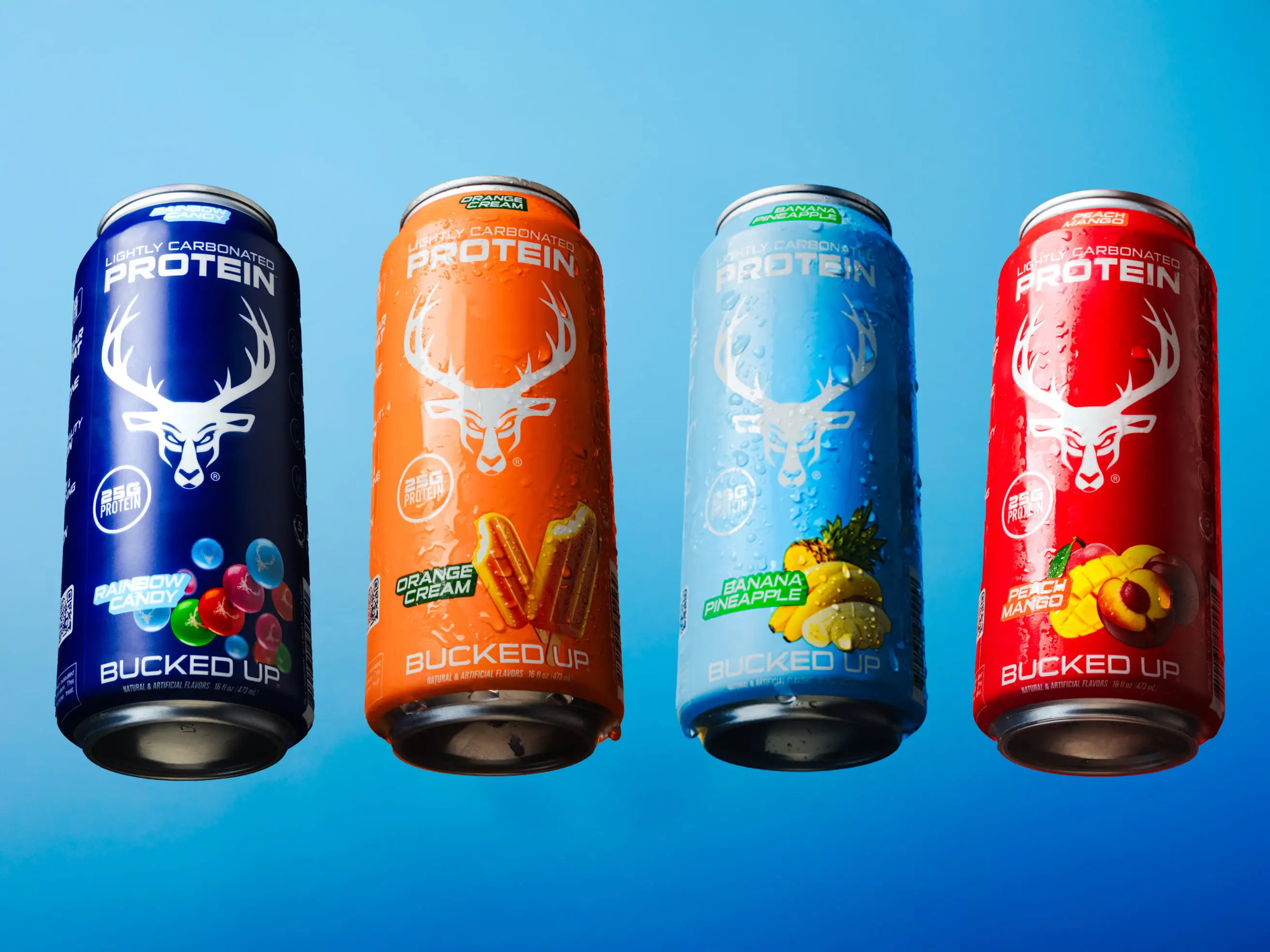
Try Bucked Up’s 100% whey isolate in carbonated form for post-workout convenience.
Timing Your Protein for Better Muscle Growth
Protein timing influences how effectively your body uses amino acids for muscle repair and growth. Areta et al. (2013) in the Journal of Physiology compared different protein distribution patterns over 12 hours after exercise and found that 4 doses of 20 grams produced greater muscle protein synthesis than 2 doses of 40 grams or 8 doses of 10 grams.
This research supports spreading protein across 4-5 meals per day with 20-40 grams at each meal. A post-workout meal within 60-90 minutes that includes 40-50 grams of protein and some fast-digesting carbohydrates can further support muscle protein synthesis.
| Timing | Protein Amount | Purpose | Bucked Up Application |
|---|---|---|---|
| Pre-workout (2 hours) | 30-40g | Fuel training | 1 can + light meal |
| Post-workout (within 90 min) | 40-50g | Maximize MPS | 2 cans or 1 can + food |
| Between meals | 20-30g | Maintain synthesis | 1 can as snack |
| Before bed | 30-40g | Overnight recovery | 1 can + casein source |
Bucked Up Protein Soda digests quickly, which suits post-workout use when you want 25 grams of protein without a heavy shake.1 Research shows the post-exercise anabolic window for muscle protein incorporation lasts around 24 hours and does not require immediate protein intake. This wider window gives you flexibility while still supporting results.
Protein Plans for Muscle Building: Gym-Goers, Busy Professionals & GLP-1 Users
You can apply these protein targets and timing guidelines to real-life eating patterns that match your schedule. The sample plans below show how different lifestyles can still hit effective daily protein ranges.
Gym-Goer or Athlete Plan (180 lbs, 164g daily target):
- Breakfast: 3 eggs + Greek yogurt (32g)
- Pre-workout: Bucked Up Protein Soda (25g)
- Post-workout: Bucked Up Protein Soda + banana (25g)
- Lunch: Chicken breast salad (30g)
- Dinner: Salmon + quinoa (28g)
- Evening snack: Cottage cheese (24g)
Busy Professional Plan (150 lbs, 136g daily target):
- Morning: Protein smoothie (25g)
- Mid-morning: Bucked Up Protein Soda (25g)
- Lunch: Turkey sandwich + Greek yogurt (35g)
- Afternoon: Bucked Up Protein Soda (25g)
- Dinner: Lean beef stir-fry (26g)
GLP-1 User Plan (150 lbs, 109g daily target):
Many clinicians recommend 1.0-1.6 grams of protein per kilogram of ideal body weight daily for people on GLP-1 therapy to help preserve muscle during weight loss. In individuals using GLP-1 receptor agonists like semaglutide and tirzepatide, 20-40% of weight lost can come from lean mass when protein intake is too low.
- Morning: Bucked Up Protein Soda (25g)
- Mid-day: Light chicken soup + crackers (20g)
- Afternoon: Bucked Up Protein Soda (25g)
- Evening: Small portion fish + vegetables (22g)
- Before bed: Small Greek yogurt (12g)
The light, carbonated format of Bucked Up Protein Soda can work well for GLP-1 users who experience appetite suppression and find larger solid meals difficult.1
Get the light, carbonated protein that works with reduced appetite on GLP-1 therapy.
Common Myths & Pitfalls
Several common myths can slow muscle-building progress when you rely on them. The first myth claims that protein alone builds muscle, which is not accurate. Marily Oppezzo, PhD, dietician at the Stanford Prevention Research Center, explains: “The biggest thing that stops muscle loss is strength training. What higher protein adds to that is pretty small potatoes”. This mindset can cause people to chase protein numbers while neglecting consistent resistance training.
Even with regular training, a second pitfall appears when intake stays below about 1 gram of protein per pound of body weight. Many nutrition experts encourage athletes and highly active people to raise protein above baseline calculations so their intake matches their training demands. Falling short here limits how much muscle your body can build from each workout.
A third mistake comes from outdated timing rules that focus on an extremely short post-workout window. Many people still believe they must drink a shake immediately after lifting. In reality, the anabolic window lasts much longer, so you can spread protein across the day without stressing over the exact minute you finish your last set.
Frequently Asked Questions
How much protein do you need to build muscle?
For muscle building, aim for the 1.6-2.2 g/kg range discussed earlier. This translates to approximately 0.73-1.0 grams per pound. Focus on hitting that daily total and spreading it across 4-5 meals with 20-40 grams per meal.
What protein is best for muscle growth?
Whey protein isolate is a strong choice for muscle growth because it has a complete amino acid profile, a fast absorption rate, and high leucine content. Compared to whey concentrate or many blended products, isolate usually provides more protein with fewer fats and carbohydrates, which suits post-workout use and muscle protein synthesis.1
Will I gain muscle eating 100 grams of protein a day?
Whether 100 grams of protein per day supports muscle growth depends on your body weight. For someone at 130 pounds or less, 100 grams can cover typical muscle-building needs. People at 150 pounds or above often need the higher range shown in the comparison table earlier to support muscle gain.
What is the 2-hour protein rule?
The 2-hour protein rule that says you must eat protein within two hours after training does not match current evidence. Research shows the anabolic window extends for about 24 hours after exercise. Eating protein within 60-90 minutes can still help, but the key factor is meeting your total daily protein target with regular meals.
How should I distribute protein throughout the day?
Distribute protein evenly across 4-5 meals per day, with 20-40 grams at each meal. This pattern supports muscle protein synthesis more effectively than taking very large amounts in only one or two sittings. Include protein at breakfast, lunch, dinner, and one or two snacks, and add a post-workout serving when it fits your schedule.
Conclusion
Building muscle requires hitting the protein targets outlined above and spreading that intake across multiple meals to support muscle protein synthesis. Whole foods form a solid foundation, and convenient options like Bucked Up Protein Soda can help close the gap between your current intake and your muscle-building goals.1
With 25 grams of whey protein isolate, zero sugar, and just 100 calories per can, Bucked Up Protein Soda offers a refreshing alternative to heavy protein shakes. Whether you are a busy professional, a dedicated gym-goer, or managing appetite changes on GLP-1 medications, this carbonated protein option can fit smoothly into your routine.
Start hitting your protein targets with carbonated convenience that tastes great.
1 The content provided in this article is for informational purposes only and is not medical advice. Consult with a medical professional before implementing any changes to your diet, health, or exercise routines.
Individual results will vary and are based on a combination of each individual’s diet, exercise, age, and health circumstances.
These statements have not been evaluated by the Food and Drug Administration. This product is not intended to diagnose, treat, cure or prevent any disease.
This article was written by Ryan Gardner, CEO of Bucked Up. As the maker of Bucked Up Protein Soda, we have a financial interest in this information. The views expressed are our own and should be read with that context in mind.